Stimulation & Implants
Spinal Cord Stimulation
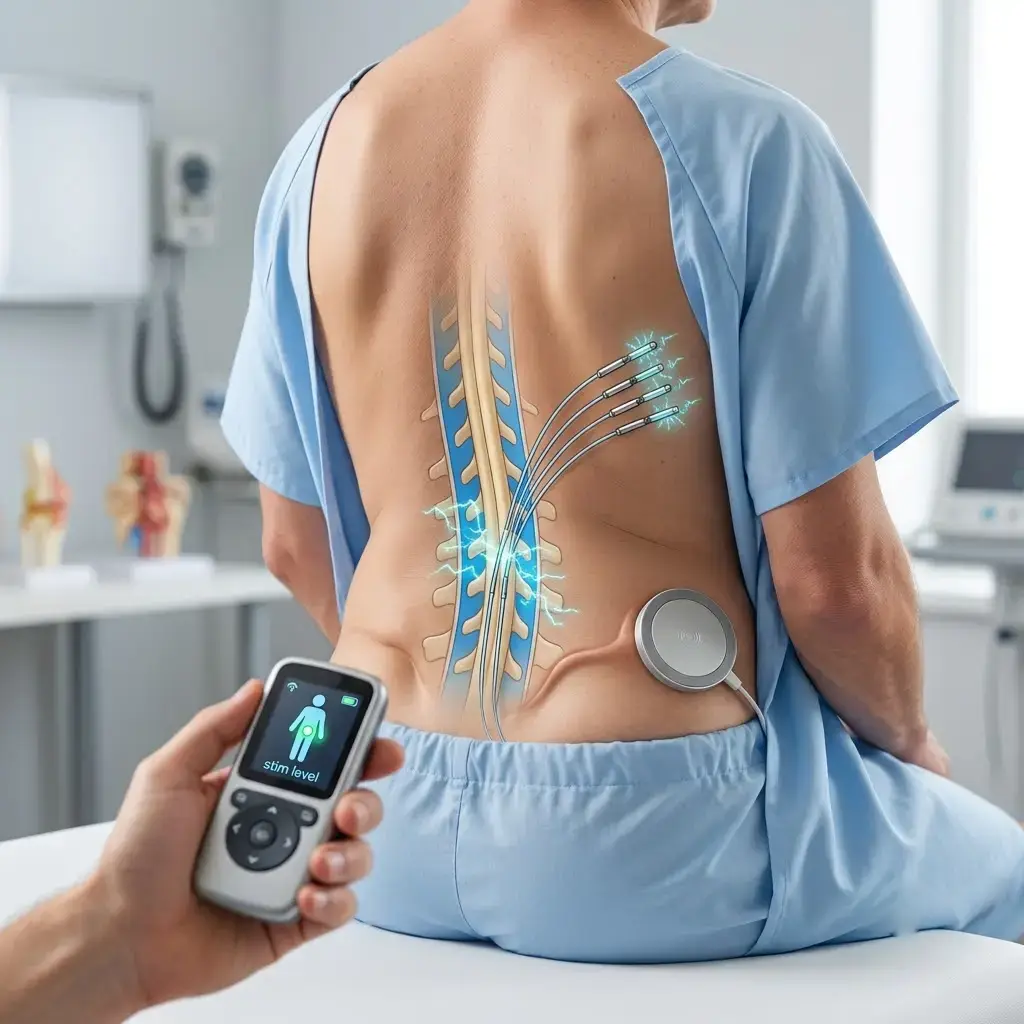
Spinal cord stimulation is a small implanted device that delivers gentle electrical pulses near the spine, interrupting pain signals before they reach the brain. It is considered for chronic back and nerve pain that has outlasted medication, injections, or surgery, and every patient tries a temporary trial device before anything permanent is placed.
Request an AppointmentWhat is
Spinal Cord Stimulation?
When chronic back or nerve pain has outlasted medication, injections, and even surgery, the problem is often the signal itself: pain messages that keep firing long after they should have stopped.
Spinal cord stimulation intercepts those messages. A small device, placed near the spine, delivers gentle electrical pulses that quiet the pain signals before they ever reach your brain.
You test-drive it first. A trial period with a temporary device lets you feel the relief in your everyday life, at home, at work, sleeping, before anything is implanted. If it doesn't work for you, nothing permanent has happened.
For many patients, the result is life-changing: less pain, fewer pills, and a return to the things chronic pain took away.
Dr. Nair is one of the region's most experienced stimulator implanters. Your candidacy, trial, and placement are all handled by the same physician.
A temporary trial stimulator lets you experience the relief for about a week in your normal routine before deciding on the implant.
Stimulation targets the pain signal itself, and many patients reduce or eliminate opioid medication after a successful implant.
The device is placed through a small procedure, and it can be adjusted, turned off, or removed entirely if your needs change.
Decades of clinical evidence support SCS for failed back surgery syndrome, neuropathy, sciatica, and other chronic nerve pain.
Am I a candidate for spinal cord stimulation?
When pain has outlasted every treatment meant to end it, that’s when we talk about SCS.
Spinal cord stimulation is a considered recommendation, not a default. Dr. Nair evaluates your history, your imaging, and a temporary trial before anything permanent is placed.
Chronic Pain Lasting Months or Longer
Pain that has persisted for six months or more and continues to limit your daily life.
Neuropathic Pain Features
Burning, tingling, or electric-shock pain: the signal patterns stimulation quiets best.
Persistent Pain After Spine Surgery
Back or leg pain that survived surgery, or returned after it, often called failed back surgery syndrome.
Complex Regional Pain Syndrome
CRPS responds especially well to stimulation when earlier treatments have fallen short.
Insufficient Response to Conservative Care
Medication, physical therapy, and injections have been given a real chance without lasting relief.
Successful Temporary SCS Trial
The implant is only recommended after a one-week trial proves itself in your daily life.
Common questions about spinal cord stimulation
A spinal cord stimulator is an implanted medical device that uses mild electrical impulses to help manage chronic pain signals.
What is a spinal cord stimulator?
A spinal cord stimulator is an implanted medical device that uses mild electrical impulses to help manage chronic pain signals.
Ready when you are.
Try Spinal Cord
Stimulation First
A temporary SCS trial lets you feel the relief in your daily life before any implant is placed. Ask Dr. Nair whether spinal cord stimulation fits your pain. The evaluation starts with one call.
Prefer to talk? Call (502) 995-4004, answered 24/7.
Medically reviewed by Ajith Nair, M.D., Founder & Medical Director at Kentuckiana Pain Specialists. This page is for education and is not a substitute for a personalized medical consultation.
Last medically reviewed July 2026Updated