
Nerve Procedures
Radiofrequency Ablation
Radiofrequency ablation uses controlled heat to quiet the small nerves carrying pain from a specific joint, after diagnostic blocks confirm the target. Relief commonly lasts from six months to two years, and the procedure treats chronic neck, back, and joint pain, and can be repeated when the nerves regrow and pain returns.
Request an AppointmentWhat is
Radiofrequency Ablation?
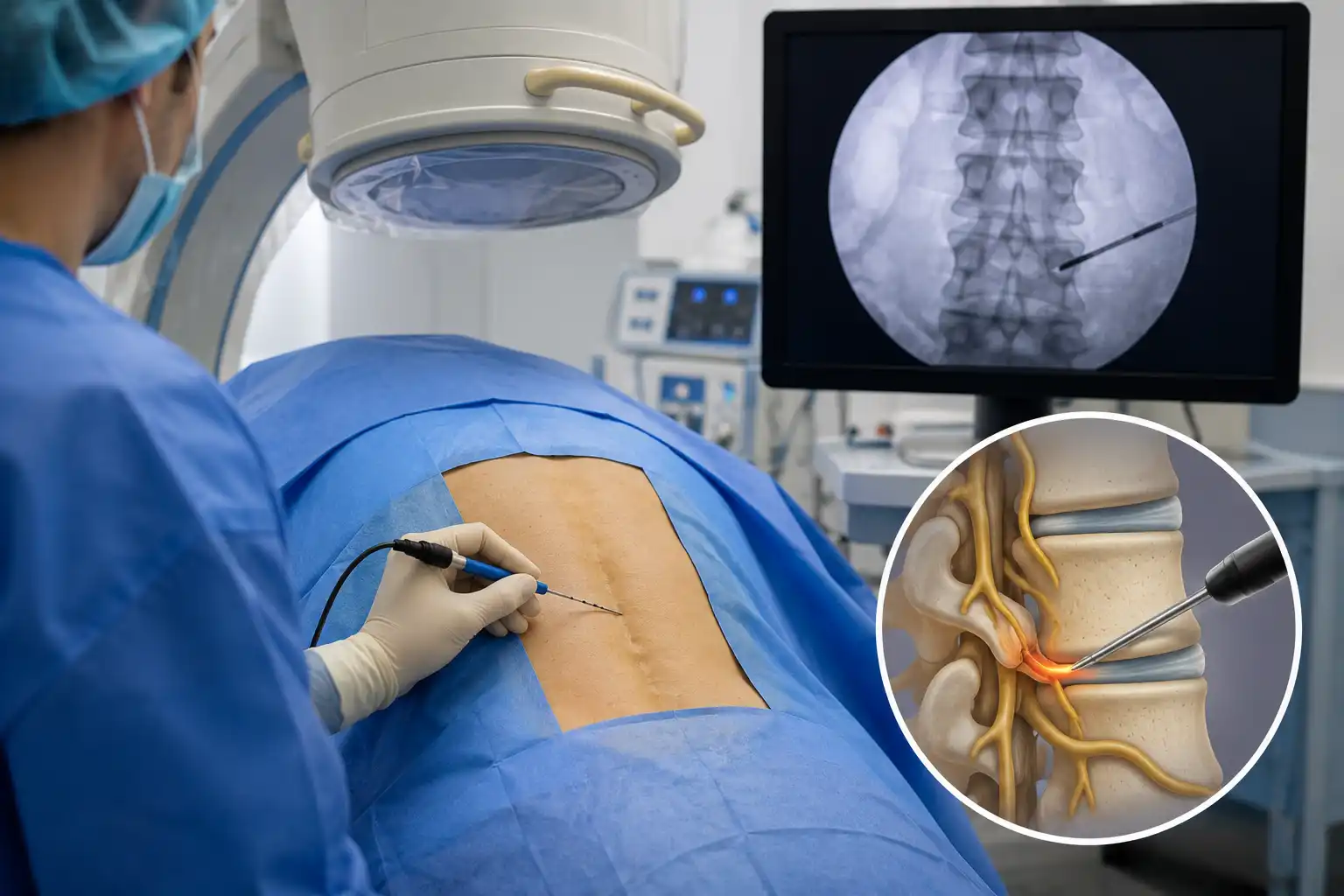
Radiofrequency ablation (RFA) is a minimally invasive procedure that uses radiofrequency energy to create controlled heat near specific nerves involved in pain signaling, reducing the nerve's ability to send pain signals to the brain.
It starts with proof. Before RFA is recommended, diagnostic nerve blocks confirm the source of your pain; if those blocks provide meaningful temporary relief, RFA may be considered as the longer-lasting version of the same answer.
During the procedure, Dr. Nair uses imaging guidance to place a specialized needle near the targeted nerve, then applies radiofrequency energy to heat the nerve area and quiet its signals. The treatment area is numbed first, so most patients feel pressure rather than pain.
RFA doesn't correct arthritis or disc degeneration, but for many patients it reduces pain from the affected area for several months or longer, improving movement and daily function. And if the nerve regenerates and symptoms return, the procedure can be safely repeated.
Many of Dr. Nair's RFA patients achieve significant relief lasting 9–24 months.
A diagnostic nerve block always comes first. RFA only targets nerves that have already proven to be the pain source.
Many patients experience significant relief lasting 9–24 months from a single outpatient session.
Nerves can regenerate over time. If symptoms come back, the procedure can be safely performed again.
Dr. Nair can treat multiple target nerves during the same procedure session based on your pain pattern.
Am I a candidate for radiofrequency ablation?
When a nerve block proves the source, controlled heat can quiet it for months.
RFA may be considered after a careful evaluation and diagnostic testing. It may help selected patients with:
Chronic Neck Pain
Persistent neck pain linked to irritated spinal nerves.
Chronic Low Back Pain
Ongoing lower back pain caused by nerve-related issues.
Facet Joint Pain
Pain coming from the small joints of the spine.
Arthritis-Related Spine Pain
Spine pain caused by arthritis or joint degeneration.
Sacroiliac Joint Pain
Selected SI joint pain cases that respond to nerve treatment.
Pain Confirmed by Blocks
Pain that improves temporarily after diagnostic nerve blocks.
Common questions about radiofrequency ablation
Radiofrequency Ablation is a minimally invasive procedure that uses controlled heat to reduce pain signals from targeted nerves.
What is Radiofrequency Ablation?
Radiofrequency Ablation is a minimally invasive procedure that uses controlled heat to reduce pain signals from targeted nerves.
Ready when you are.
Months of Relief,
One Visit
If diagnostic blocks have shown where your pain lives, or you're still chasing the source, ask Dr. Nair whether radiofrequency ablation fits your pain.
Prefer to talk? Call (502) 995-4004, answered 24/7.
Medically reviewed by Ajith Nair, M.D., Founder & Medical Director at Kentuckiana Pain Specialists. This page is for education and is not a substitute for a personalized medical consultation.
Last medically reviewed July 2026Updated