
A specialized, catheter-based epidural procedure for selected patients when scar tissue is suspected of irritating spinal nerves and standard injections have not provided enough relief.
Epidural Lysis of Adhesions, also called epidural adhesiolysis, is a minimally invasive procedure that uses a small catheter placed into the epidural space of the spine. The goal is to treat areas where scar tissue may be irritating, restricting, or interfering with spinal nerves, delivering medication more precisely to the affected area through the catheter.
A standard epidural injection simply places medication into the epidural space. This procedure is more specialized: it uses a catheter to reach areas where scar tissue may be limiting medication spread or contributing to symptoms, and it may be considered when standard injections have not provided enough relief.
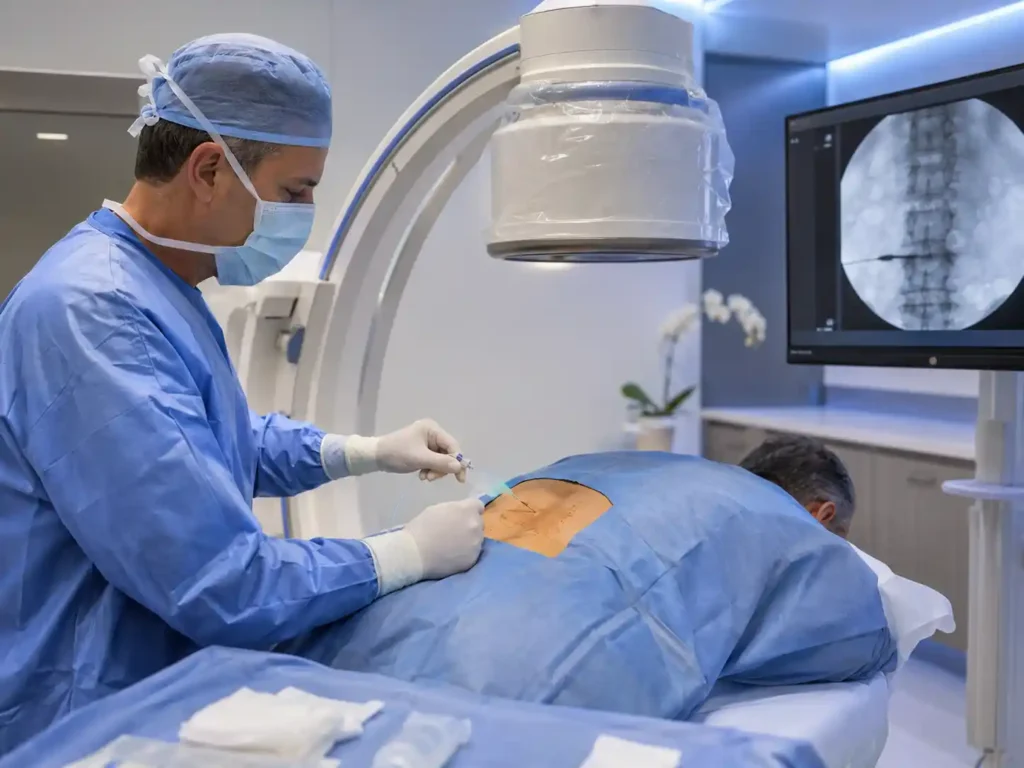
This is a specialized procedure and is not appropriate for every patient with back or leg pain. Your provider will determine whether scar tissue is likely involved based on your symptoms, history, imaging, and prior treatment response. It may be considered for patients with:
Persistent pain following spine surgery.
Scar tissue suspected around spinal nerves.
Leg pain from nerve irritation.
Ongoing irritation of spinal nerves.
Pain not improved with standard epidural injections.
Selected cases of failed back surgery syndrome.
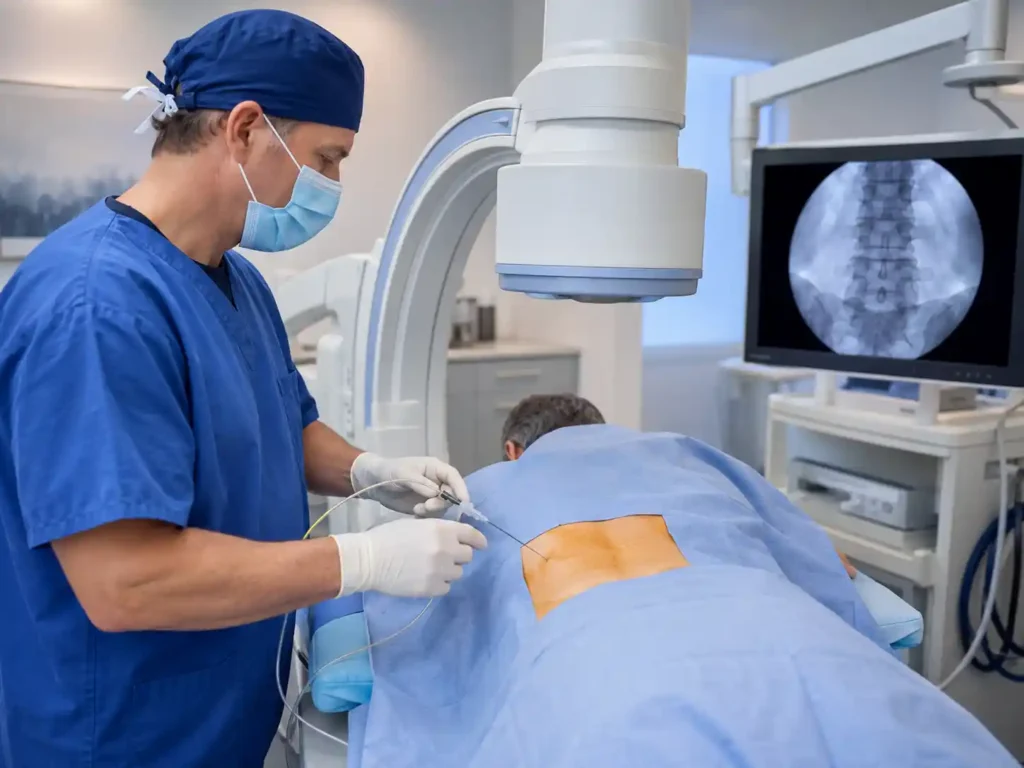
You are positioned on a procedure table, and the treatment area is cleaned and numbed. Using imaging guidance, the physician places a small catheter into the epidural space, and medication is delivered through the catheter to the targeted area.
Your provider will explain the exact process, the medications used, and recovery instructions before the procedure.
Scar tissue can form around spinal nerves after surgery, injury, or inflammation, and may contribute to pain by limiting medication spread or irritating the nerve. By guiding a catheter into the epidural space, this procedure may improve medication access around the irritated nerve, with the goal of reducing irritation and improving pain control. Results vary. Possible risks include soreness, bleeding, infection, allergic reaction, temporary numbness or weakness, increased pain, catheter-related complications, spinal fluid leak, or nerve irritation.
At Kentuckiana Pain Specialists, cancer pain management is approached with compassion, safety, and clear communication. Our team works to understand your pain source, current treatment plan, medication use, and quality-of-life goals, and discusses advanced options when appropriate to improve comfort while supporting your overall cancer care plan.
If you or a loved one is experiencing cancer-related pain, schedule a consultation with Kentuckiana Pain Specialists to discuss advanced pain management options. Call (502) 995-4004 today.