
Image-guided injections that place anti-inflammatory medication near irritated spinal nerves to ease neck, back, arm, or leg pain and support daily activity and rehabilitation.
An epidural injection delivers medication into the epidural space, the area around the spinal nerves. The injection may include anti-inflammatory steroid medication and, in some cases, local anesthetic.
When spinal nerves become inflamed or compressed, they can cause pain that travels into the arm or leg. Epidural injections are designed to place medication close to the irritated nerve roots to help reduce inflammation and calm pain signals.

Not every type of back or neck pain responds to epidural injections. A consultation is needed to determine whether your symptoms are nerve-related. They may be recommended for:
Low back pain that radiates down the leg, including sciatica.
Neck pain that radiates into the arm.
Pain related to a herniated disc.
Nerve irritation from a bulging disc.
Narrowing of the spinal canal causing nerve symptoms.
Spinal nerve inflammation or radiculopathy.
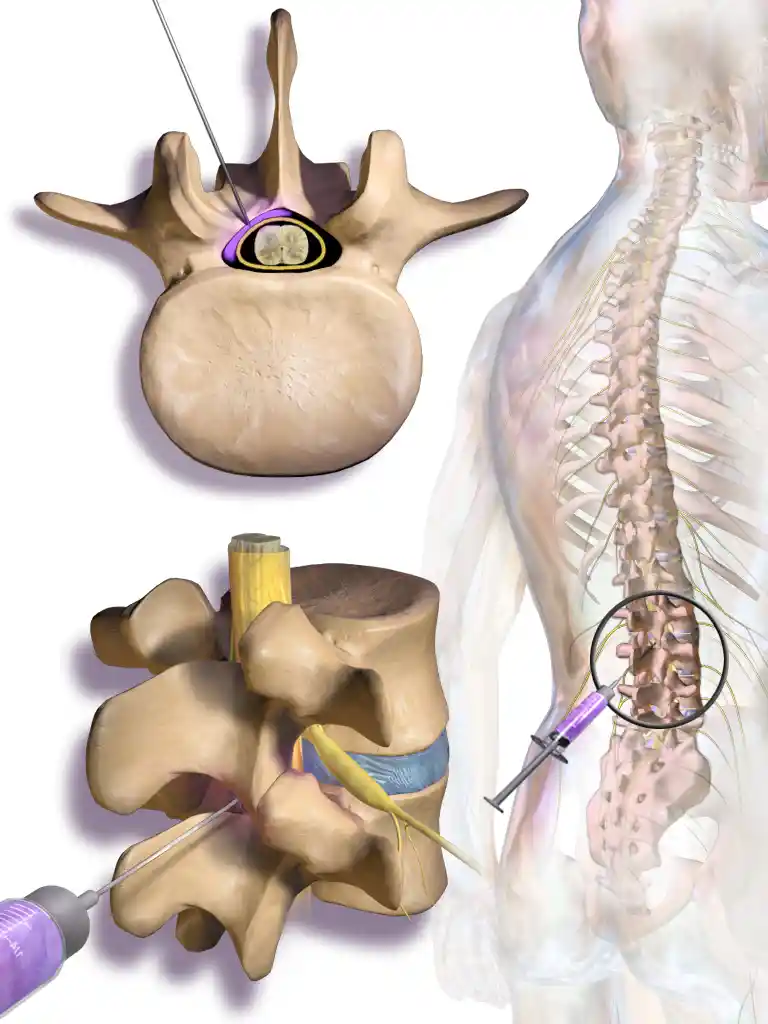
You lie on a procedure table, the treatment area is cleaned, and local anesthetic numbs the skin. Using imaging guidance, the physician places a small needle into the epidural space, and contrast dye may confirm proper placement before medication is injected.
The procedure is usually performed on an outpatient basis, and your full visit may include preparation and recovery monitoring. Some patients feel improvement within a few days; others have partial, temporary, or no meaningful relief.
The goal of an epidural injection is to reduce pain enough for you to move better, function more comfortably, and continue with other parts of your care plan, such as physical therapy. Epidural injections are not a permanent cure, and results vary. Possible side effects include soreness, a temporary pain increase, headache, flushing, sleep changes, temporary blood sugar changes, bleeding, infection, allergic reaction, or nerve irritation.
At Kentuckiana Pain Specialists, cancer pain management is approached with compassion, safety, and clear communication. Our team works to understand your pain source, current treatment plan, medication use, and quality-of-life goals, and discusses advanced options when appropriate to improve comfort while supporting your overall cancer care plan.
If you or a loved one is experiencing cancer-related pain, schedule a consultation with Kentuckiana Pain Specialists to discuss advanced pain management options. Call (502) 995-4004 today.