
An emerging option for selected Long COVID symptoms that may involve nervous system dysfunction. Stellate Ganglion Block (SGB) is not a cure, the evidence is still developing, and a consultation is needed to determine whether it may be appropriate for you.
A Stellate Ganglion Block (SGB) is an injection placed near the stellate ganglion, a group of sympathetic nerves in the neck that help regulate automatic functions such as heart rate, blood flow, sweating, and stress responses. Local anesthetic is injected near these nerves to temporarily block sympathetic activity. SGB has been used in pain medicine for years for certain nerve-related conditions of the head, neck, chest, arm, and hand.
Long COVID refers to symptoms that continue or appear after a COVID-19 infection and can affect multiple body systems. Some Long COVID symptoms may involve autonomic nervous system dysfunction, which is why researchers have studied whether temporarily blocking the stellate ganglion may help calm or modulate sympathetic activity in selected patients.
Early studies and case reports have described improvement in symptoms such as fatigue, brain fog, smell and taste changes, and sleep disruption, but the evidence is still limited and outcomes are not guaranteed. You can read available research in the National Library of Medicine.

Long COVID can affect many body systems, and not every symptom comes from nervous system dysfunction. A Stellate Ganglion Block may be discussed if you have persistent symptoms such as these, which can also include headaches, sleep problems, heart palpitations, or symptoms that worsen after physical or mental effort. A detailed evaluation is important before deciding whether SGB is worth considering.
Ongoing tiredness or low energy that affects daily function, especially when it does not improve with rest.
Difficulty focusing, remembering details, processing information, or staying mentally clear.
Breathing difficulty or air hunger that persists after COVID-19, once other urgent causes have been evaluated.
Chest pain or tightness should always be medically evaluated. Seek urgent care if it is severe or sudden, or comes with shortness of breath, sweating, fainting, or arm or jaw pain.
Persistent changes in smell or taste, and dizziness or lightheadedness, especially when standing or changing positions.
Ongoing muscle pain, joint discomfort, or nerve-like pain as part of a broader Long COVID pattern.
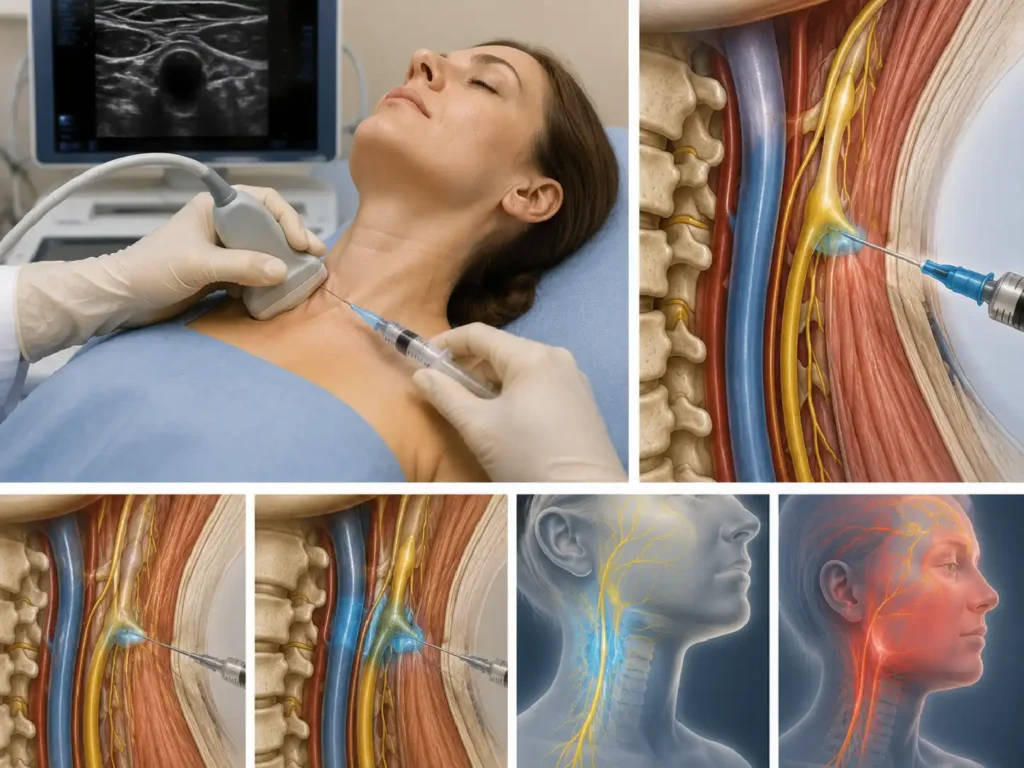
A Stellate Ganglion Block is usually performed as an outpatient procedure. You are positioned comfortably, often lying on your back, the skin on the side of the neck is cleaned, and a local anesthetic may be used to numb the skin.
Using imaging guidance, Dr. Ajith Nair places a small needle near the stellate ganglion. Once the position is confirmed, anesthetic medication is injected. The procedure itself is usually brief, and you are observed for a period of time before going home.
SGB for Long COVID is an emerging, off-label option, not a guaranteed solution. The evidence is still developing, results vary widely, and many patients may notice little or no change. As with any procedure there are possible risks, including soreness, bruising, bleeding, infection, hoarseness, a drooping eyelid, temporary swallowing difficulty, dizziness, nerve irritation, and, rarely, serious complications involving nearby neck structures. Your physician will review the risks, benefits, and alternatives before treatment. For appropriate patients, SGB may offer the following potential benefits as part of a broader care plan.
Some temporary effects are common after a Stellate Ganglion Block. Here is what most patients can expect, and how response may unfold over time.
Some patients notice warmth in the face, neck, arm, or hand, temporary hoarseness, a drooping eyelid on the treated side, eye redness or watering, nasal stuffiness, a lump-in-the-throat feeling, brief swallowing difficulty, or mild soreness at the injection site. These usually wear off as the anesthetic fades.
Because the block may temporarily affect comfort, coordination, or swallowing, you may be advised not to drive the same day. Arrange transportation if instructed, and rest on the day of the procedure.
Response varies. Some patients report changes within hours or days, others gradual improvement, and some no meaningful change. Tracking symptoms before and after the block helps determine whether it made a difference.
There is no guaranteed duration. Some patients have temporary improvement, others longer-lasting changes, and some no response. If a first block helps, your provider may discuss whether additional treatment is appropriate.
At Kentuckiana Pain Specialists, cancer pain management is approached with compassion, safety, and clear communication. Our team works to understand your pain source, current treatment plan, medication use, and quality-of-life goals, and discusses advanced options when appropriate to improve comfort while supporting your overall cancer care plan.
If you or a loved one is experiencing cancer-related pain, schedule a consultation with Kentuckiana Pain Specialists to discuss advanced pain management options. Call (502) 995-4004 today.