
Targeted care for nerve-related and sympathetically mediated pain. Image-guided injections that may temporarily block sympathetic nerve activity to help diagnose and manage conditions such as CRPS and other chronic nerve pain.
A sympathetic nerve block is an injection of numbing medication near a group of sympathetic nerves, part of the autonomic nervous system that helps control blood flow, sweating, temperature, and certain pain responses. When these nerves are involved in chronic pain, temporarily blocking them may reduce pain signals and related symptoms. If your pain improves after the block, it may suggest the pain is sympathetically mediated.
Depending on where the pain is located, the block may be performed in different areas:
For a broader overview of nerve block treatments, see What Is a Nerve Block?

Sympathetic nerve blocks may be considered for conditions such as Complex Regional Pain Syndrome (CRPS), sympathetically mediated pain, certain chronic nerve pain conditions, circulation-related pain, or persistent limb pain after injury or surgery. You may be evaluated if you experience symptoms such as these. They overlap with other conditions, so a full medical evaluation is important before deciding whether a block is appropriate.
Persistent burning pain, often out of proportion to the original injury.
The affected area may be intensely sensitive to light touch.
Skin temperature or color changes in the affected limb.
Swelling, or changes in sweating, around the affected area.
Pain that develops or persists after trauma, surgery, or nerve injury.
Pain that does not respond well to other treatments.
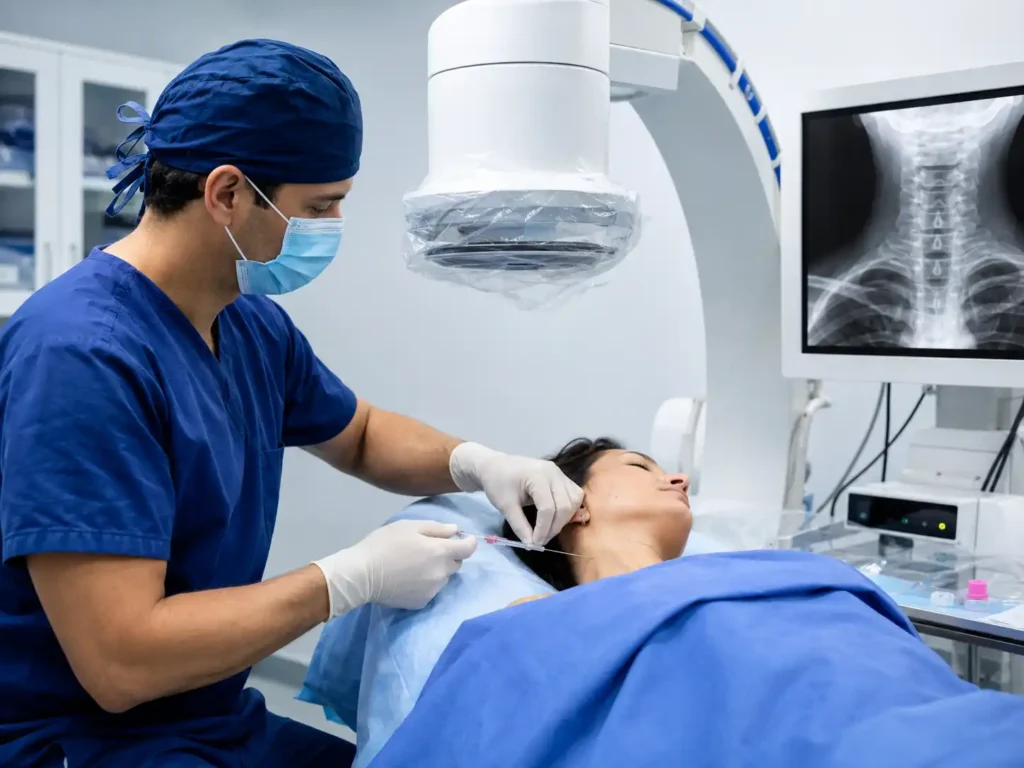
The procedure is usually performed in an outpatient setting. You are positioned comfortably on a procedure table, the treatment area is cleaned, and a local anesthetic numbs the skin.
Using imaging guidance such as fluoroscopy, Dr. Ajith Nair places a small needle near the targeted sympathetic nerve area, and once placement is confirmed, anesthetic medication is injected. A lumbar sympathetic block is performed in the lower back near the side of the spine; a stellate ganglion block is performed in the neck. The procedure may take around 30 minutes.
Sympathetic nerve blocks can provide both diagnostic information and, in some cases, symptom relief. The goal is not a permanent cure but to better understand your pain and, when possible, reduce symptoms enough to support function and quality of life. Results vary, and as with any injection there are possible risks such as soreness, bruising, bleeding, infection, temporary numbness, or dizziness, though serious complications are uncommon.
Recovery is usually straightforward. Here is what most patients can expect after a sympathetic nerve block.
You are monitored briefly before going home, and your provider may check for expected changes such as warmth or temperature change in the affected area. You may be asked to track your pain and symptoms to help confirm whether the sympathetic nerves are involved.
Some patients notice warmth, redness, or a heavy feeling in the affected limb, plus soreness at the injection site. These effects are usually temporary. A stellate ganglion block may also cause brief hoarseness, a drooping eyelid, or nasal stuffiness, which your care team will explain.
Relief varies, from short-term relief from the numbing medication to longer-lasting improvement. If the first block helps, a treatment series or other options may be discussed. If there is little change, your provider may consider other causes of your pain.
Many patients continue regular medications, but tell your team about blood thinners or anything that affects bleeding, and do not stop prescribed medication unless instructed. Avoid driving and strenuous activity on the day of the procedure, then return to light activity the next day and increase gradually.
At Kentuckiana Pain Specialists, cancer pain management is approached with compassion, safety, and clear communication. Our team works to understand your pain source, current treatment plan, medication use, and quality-of-life goals, and discusses advanced options when appropriate to improve comfort while supporting your overall cancer care plan.
If you or a loved one is experiencing cancer-related pain, schedule a consultation with Kentuckiana Pain Specialists to discuss advanced pain management options. Call (502) 995-4004 today.