
Targeted neck pain relief without invasive surgery. Minimally invasive, image-guided injections to help identify and reduce the source of chronic neck pain.
Cervical facet joints are small joints in the neck portion of the spine that support movement, stability, and flexibility. Over time, these joints may become painful due to arthritis, injury, whiplash, inflammation, or normal wear and tear.
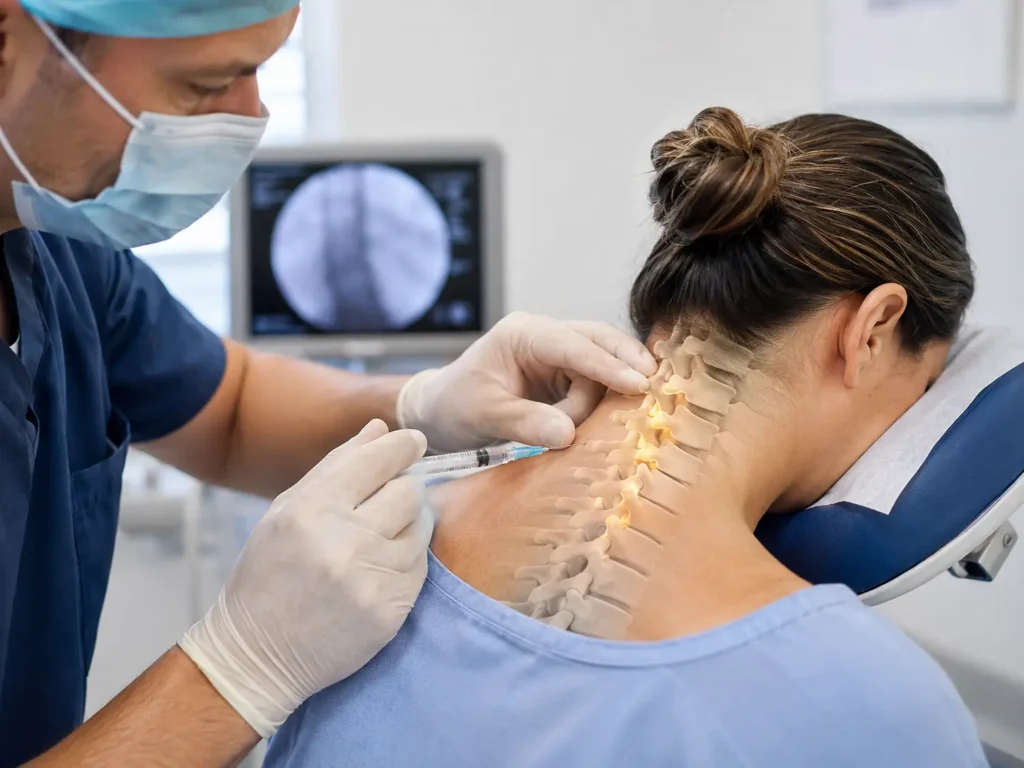
A cervical facet joint injection places numbing medication and an anti-inflammatory corticosteroid into or near the painful facet joint, using imaging guidance for precision. The injection may serve two purposes:
At Kentuckiana Pain Specialists, Dr. Ajith Nair uses a precise, medically guided approach to better understand and manage your pain.
Facet-related neck pain can feel different for every patient. You may be evaluated for a cervical facet joint injection if you experience any of these symptoms.
Pain may feel like a deep ache in the neck rather than sharp pain traveling down the entire arm.
Symptoms may worsen when turning your head side to side, tilting your head back, or looking upward.
Facet joint pain may refer discomfort into the upper shoulders or shoulder blade area.
Some patients experience headaches that seem to begin near the base of the skull or upper neck.
You may have trouble checking blind spots while driving, looking over your shoulder, or moving your neck freely.
Facet joints may become irritated after whiplash, repetitive strain, arthritis, or age-related changes in the spine.

Before the procedure, your medical history, symptoms, medications, allergies, and prior treatments will be reviewed. You may receive specific instructions about medications, especially if you take blood thinners.
During the procedure, you will lie on an X-ray table. The skin over the treatment area will be cleaned carefully and numbed with local anesthetic. Using X-ray guidance, Dr. Nair will carefully guide a small needle toward the targeted cervical facet joint. A small amount of contrast dye may be used to confirm proper needle placement. Once confirmed, numbing and anti-inflammatory medication is injected.
Cervical facet joint injections may offer several potential benefits when used for the right patient and condition.

After the procedure, you may be asked to move your neck in ways that usually trigger your pain. This helps assess whether the numbing medication has reduced your typical symptoms.
You should not drive on the day of the injection. Avoid strenuous activity for the rest of the day. Ice may be recommended for short-term soreness. Track your pain levels in a pain diary over the next several hours or days.
Some patients feel temporary relief within the first few hours from the numbing medication. Anti-inflammatory medication may take a few days to work. Improvement is often noticed within two to five days when the injection is effective.
Most patients can return to normal light activity the next day. When pain begins to improve, return to exercise gradually over one to two weeks to reduce the chance of aggravating symptoms.
If a cervical facet joint injection provides significant temporary relief, Dr. Nair may discuss radiofrequency ablation as a possible next step — a procedure that targets the nerves carrying pain signals for longer-term treatment.
At Kentuckiana Pain Specialists, cancer pain management is approached with compassion, safety, and clear communication. Our team works to understand your pain source, current treatment plan, medication use, and quality-of-life goals, and discusses advanced options when appropriate to improve comfort while supporting your overall cancer care plan.
If you or a loved one is experiencing cancer-related pain, schedule a consultation with Kentuckiana Pain Specialists to discuss advanced pain management options. Call (502) 995-4004 today.