
An advanced, trial-first treatment option for selected chronic pain conditions that have not improved enough with conservative care.
A spinal cord stimulator (SCS) is an implanted medical device used to help manage certain types of chronic pain. The system delivers mild electrical impulses to nerves in the spinal cord area to change or reduce how pain signals are processed before they reach the brain.
An SCS does not cure the underlying pain condition, but it may help selected patients manage pain, improve activity tolerance, and reduce reliance on certain pain medications. Your provider usually considers SCS after nonsurgical treatments such as physical therapy, medications, injections, or other pain management options have not provided enough relief.
The process typically begins with a temporary trial. If the trial provides meaningful pain reduction and the patient is comfortable using the device, a permanent implant may be discussed.
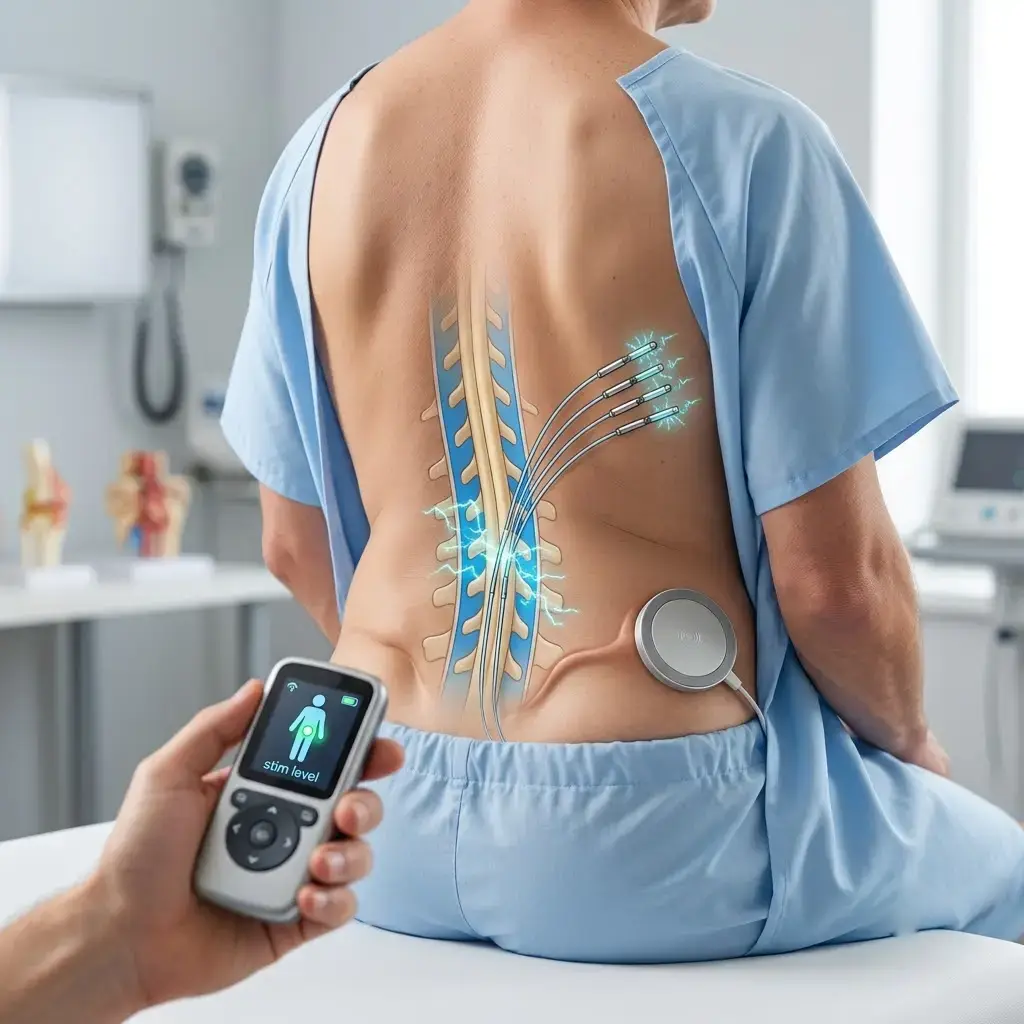
An SCS implant should be considered only after a detailed evaluation confirms that chronic pain has not responded adequately to other treatment options and that the patient is an appropriate candidate for neuromodulation.
Patients may be evaluated when pain has persisted despite appropriate conservative care and continues to affect daily function, sleep, or quality of life.
SCS may be discussed for selected nerve-related pain patterns, such as burning, tingling, shooting, or radiating pain, depending on diagnosis and evaluation.
Some patients with ongoing back or leg pain after spine surgery may be evaluated for SCS when other treatment options have not provided enough relief.
SCS may be considered for selected patients with complex regional pain syndrome when symptoms remain severe despite appropriate treatment.
Physical therapy, medications, injections, or other nonsurgical treatments are usually reviewed before spinal cord stimulation is considered.
A permanent implant is typically discussed only if a temporary trial provides meaningful pain reduction and the patient is comfortable using the system.
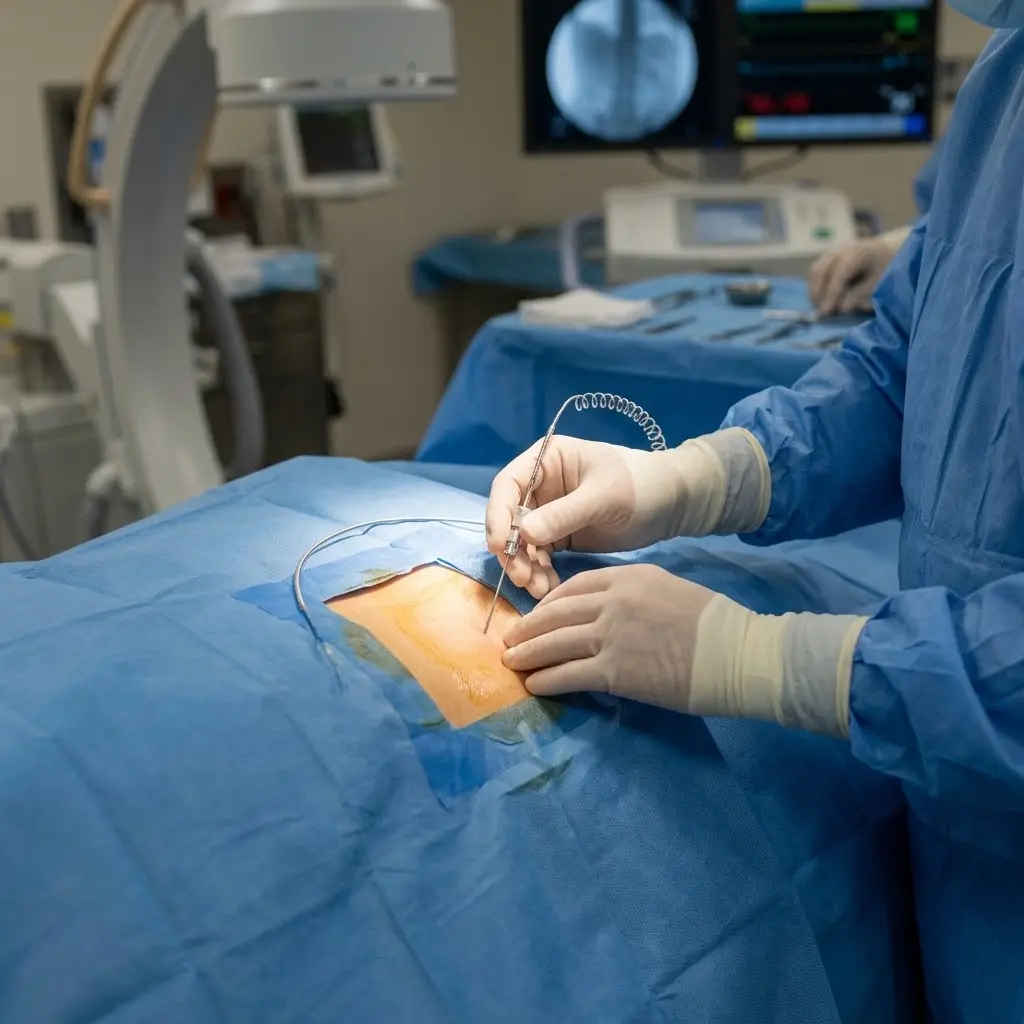
The procedure is usually completed in stages. First, temporary leads are placed in the epidural space and connected to an external generator for a trial period. The patient uses the system outside the body and tracks pain relief, activity, sleep, and comfort.
If the trial is successful, a permanent system may be implanted. Permanent leads are placed near the spinal cord and connected to a small generator implanted under the skin, often in the upper buttock or lower back area. The device is programmed so stimulation can be adjusted to the patient’s pain pattern.
For the right patient, spinal cord stimulation may help manage chronic pain when other treatments have not provided enough relief.
After an SCS trial or implant, your care team will give instructions for incision care, activity limits, device use, and follow-up programming. Healing and programming adjustments are important parts of the process.
Keep incisions clean and dry as instructed. Avoid bending, twisting, lifting, or strenuous activity until your provider clears you.
During the trial, track pain relief, activity, sleep, and comfort. A successful trial is commonly based on meaningful pain reduction and improved function.
After permanent implantation, you may need several weeks of activity restrictions while tissues heal and leads settle into position.
Stimulation settings may be adjusted during follow-up visits. Contact your care team for new pain, weakness, fever, drainage, loss of stimulation, or sudden change in coverage.
At Kentuckiana Pain Specialists, cancer pain management is approached with compassion, safety, and clear communication. Our team works to understand your pain source, current treatment plan, medication use, and quality-of-life goals, and discusses advanced options when appropriate to improve comfort while supporting your overall cancer care plan.
If you or a loved one is experiencing cancer-related pain, schedule a consultation with Kentuckiana Pain Specialists to discuss advanced pain management options. Call (502) 995-4004 today.